Wondering whether buying a condo in Flatiron is worth the premium? You are not alone. Many buyers are drawn to the neighborhood’s central location, distinctive lofts, and polished full-service buildings, but the real decision usually comes down to tradeoffs. If you are trying to decide between character and convenience, or between a lower ask and a lower monthly cost, this guide will help you compare Flatiron condos more clearly. Let’s dive in.
Why Flatiron Condos Stand Out
Flatiron is a relatively small Manhattan neighborhood with a housing mix that feels more selective than many buyers expect. Residential inventory has grown through luxury new development and loft conversions, but turnover remains low. That means even when listings are active, the condo segment can still feel tight.
The neighborhood also has a different price story depending on what you are measuring. StreetEasy shows a median sale of $1.7 million in Flatiron, while Realtor.com’s March 2026 snapshot shows a median listing price of $2.65 million, with 61 homes for sale, 95 median days on market, and a 96% sale-to-list ratio. These numbers are useful as directional signals, but they are not directly interchangeable because they come from different datasets.
Condo Search Needs Careful Filtering
One of the first Flatiron tradeoffs is simply finding the right inventory. Listings in the area often include condos, co-ops, and condops together, so your search can look broader than your actual options. If you are specifically buying a condo, careful filtering matters from the start.
This mixed product type is one reason buyers can misread the market. A search result may suggest plenty of choices, but the true condo inventory can be much narrower. In a low-turnover neighborhood like Flatiron, that difference matters when you are trying to act quickly and compare value.
Price Range Is Wider Than It Looks
Flatiron condo inventory spans a very broad range, and list price alone rarely tells the full story. Current active examples include a 500-square-foot studio at $770,000, a 917-square-foot one-bedroom at $1.875 million, a 1,372-square-foot two-bedroom at $1.995 million, a 1,613-square-foot two-bedroom at $2.695 million, a 1,926-square-foot three-bedroom at $3.599 million, and a 5,866-square-foot penthouse at $16.5 million.
For you as a buyer, the takeaway is simple: two homes with similar bedroom counts can offer very different living experiences and value per square foot. In Flatiron, you are often comparing compact efficient layouts against loft-like homes with larger footprints, higher ceilings, and more flexible space.
Loft Character vs New Development Ease
This is usually the biggest decision point for buyers in Flatiron. Many condo shoppers are choosing between older loft conversions with strong architectural character and newer towers with a more streamlined ownership experience. Neither option is automatically better. It depends on how you live and what you want your monthly costs to support.
What Loft Conversions Offer
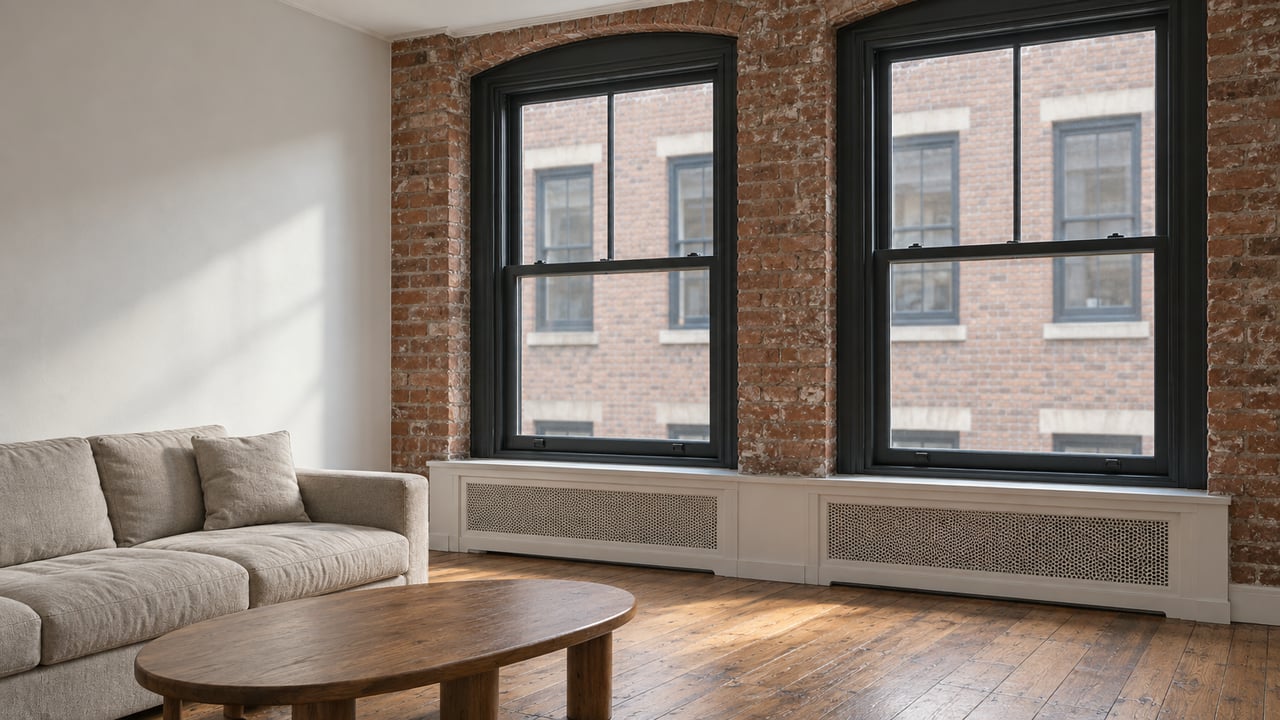
Loft-style condos often bring the kind of features that make Flatiron feel unique. Current examples in the neighborhood include homes with full-floor layouts, private keyed elevators, open footprints, 9-foot to 13-foot ceilings, oversized windows, exposed beams, and flexible live/work-style layouts.
If you value volume, individuality, and a less standardized floorplan, loft conversions can be compelling. You may get a larger or more adaptable layout than you would in a newer tower. But these buildings often come with a lighter amenity package, so you need to decide how much service matters in your day-to-day life.
What Newer Towers Offer
Newer Flatiron condo buildings tend to provide more standardized one- to three-bedroom layouts. For example, 35XV, completed in 2015, includes 55 units with one- to three-bedroom residences. That kind of inventory can appeal to buyers who want predictability in layout, finishes, and building operations.
These buildings also tend to offer a more full-service lifestyle. Depending on the property, features can include a 24-hour doorman, concierge, fitness center, lounge space, rooftop terrace, package room, storage, and bike storage. If convenience and service are high on your list, this side of the market may feel more efficient and turnkey.
Amenities Come With Real Costs
In Flatiron, amenity differences are not just about lifestyle. They directly affect your monthly ownership costs. That is why comparing condos here means looking beyond the purchase price.
The neighborhood shows a clear split between luxury service buildings and lighter-service loft properties. At the full-service end, buildings such as 10 Madison Square West advertise doorman and concierge service, porter service, a live-in resident manager, courtyard garden, health club, pool, spa, steam and sauna, yoga and Pilates studios, and a playroom. Other newer buildings, such as 35XV, also offer robust service and amenity packages.
By contrast, some loft buildings offer a much simpler setup. A building like 47 East 19th Street lists elevator and live-in super service without the wellness and hospitality-style extras. There are also middle-ground options, such as 254 Park Avenue South, with concierge, full-time doorman, elevator, live-in super, gym, and laundry in building.
Monthly Carrying Costs Matter
Flatiron buyers should pay close attention to common charges and real estate taxes because the spread can be dramatic. Current examples show common charges and taxes of $813 and $932 on a 464-square-foot studio, $1,200 and $1,878 on a 1,602-square-foot two-bedroom loft, $3,975 and $3,212 on a combined three-bedroom condo, and $5,735 and $6,050 on a 2,999-square-foot residence in the Flatiron Building.
That range shows why the lowest asking price is not always the most cost-effective purchase. A building with a richer service package can raise your monthly outlay significantly before you even factor in mortgage principal and interest. In Flatiron, a smart comparison often starts with total monthly ownership cost, not just the sticker price.
Property Taxes in NYC Condos
Most Flatiron condominiums fall into NYC tax class 2, and the 2026 Class 2 rate is 12.439%. NYC property owners receive tax bills either quarterly or semiannually. Some eligible condo developments may also receive the co-op and condo property tax abatement if the unit is your primary residence and the building files on the owner’s behalf.
That abatement can range from 17.5% to 28.1%, depending on average assessed value and program eligibility. Because the building’s filing and your use of the unit matter, this is another detail worth confirming before you buy. It can meaningfully affect your true monthly cost.
Comparing Flatiron to Nearby Options
Sometimes the clearest way to understand Flatiron is to compare it with nearby neighborhoods that attract similar buyers. The main question is whether you want Flatiron’s blend of centrality, loft character, and luxury product enough to pay for it.
Flatiron vs Chelsea
Chelsea is the nearest west-side comparison and has a broader footprint. StreetEasy reports a median sale of $1.3 million and a median base rent of $5,500 there, compared with Flatiron’s $1.7 million median sale and $6,000 median base rent. Chelsea also includes a mix of new luxury condos and prewar co-ops.
For some buyers, Chelsea offers more geographic spread and potentially more variety. But that larger footprint can also mean longer walks to the subway depending on the block. If you want a tighter, more centrally positioned neighborhood, Flatiron may still feel more convenient.
Flatiron vs Gramercy Park
Gramercy Park tends to read as quieter and more traditionally residential. Its housing mix includes townhouses, walk-ups, and established co-op buildings. StreetEasy shows a median sale of $1.1 million and a median base rent of $4,995 there.
Compared with Flatiron, Gramercy generally offers less of the full-service condo atmosphere and more of an old-world residential feel. If your priority is a polished condo building with stronger amenity offerings, Flatiron may fit better. If you value a calmer setting and are open to a different building mix, Gramercy may be worth considering.
Flatiron vs NoMad
NoMad is often the closest direct comparison because it also has a strong concentration of newer residential product. StreetEasy’s current condo medians there are $1.85 million for studios, $2.74 million for two-bedrooms, and $4.97 million for three-bedrooms.
On a price-per-square-foot basis, the neighborhoods are quite close. StreetEasy’s snapshot places Flatiron at $1,971 per square foot, NoMad at $2,074, Chelsea at $2,079, and Gramercy Park at $1,959. That suggests Flatiron is priced much closer to NoMad and Chelsea than to a value discount alternative.
How to Evaluate a Flatiron Condo Smartly
Because Flatiron mixes so many building types and ownership experiences, your best decision usually comes from comparing the full package. A data-driven review can help you avoid overpaying for amenities you will not use or overlooking a higher-quality purchase because the list price seems high at first glance.
Focus on these points when you compare options:
- Price per square foot
- Common charges
- Monthly real estate taxes
- Amenity package
- Layout efficiency
- Ceiling height and window exposure
- Building service level
- Resale appeal relative to nearby inventory
If you look at those factors together, the tradeoffs become much clearer. In Flatiron, the right condo is often the one that best matches your lifestyle and monthly budget, not the one with the flashiest listing photos.
The Bottom Line on Flatiron Condo Tradeoffs
Buying a condo in Flatiron usually means balancing space, character, service, and monthly cost. Loft conversions can offer scale and personality that feel hard to replicate elsewhere, while newer towers can deliver convenience, amenities, and a more predictable ownership experience. The better choice depends on what you want your home to do for you every day.
If you want a sharp, data-backed read on which Flatiron condos truly offer value, working with an advisor who can compare pricing, charges, taxes, and building quality side by side can make the process much clearer. If you are weighing your options in Flatiron or another Manhattan neighborhood, Josue Gonzalez can help you cut through the noise and buy with confidence.
FAQs
What makes buying a condo in Flatiron different from buying in other Manhattan neighborhoods?
- Flatiron has a mix of loft conversions, newer luxury towers, and low-turnover inventory, so condo buyers often need to compare very different layouts, service levels, and monthly costs within a relatively small market.
What should condo buyers in Flatiron compare besides list price?
- You should compare price per square foot, common charges, real estate taxes, amenity value, layout efficiency, and building service level because these factors often reveal the real cost and value of ownership.
Are monthly costs for Flatiron condos usually high?
- They can be, especially in full-service luxury buildings where common charges and taxes materially increase the monthly outlay beyond your mortgage payment.
Are all Flatiron apartment listings condos?
- No. Flatiron listings often include condos, co-ops, and condops together, so a condo search requires careful filtering to understand your true options.
How does Flatiron compare with Chelsea, Gramercy Park, and NoMad for condo buyers?
- Flatiron generally sits above Gramercy Park on pricing, is close to NoMad and Chelsea on a price-per-square-foot basis, and often appeals to buyers who want a central location, condo inventory, and a mix of loft character and full-service living.