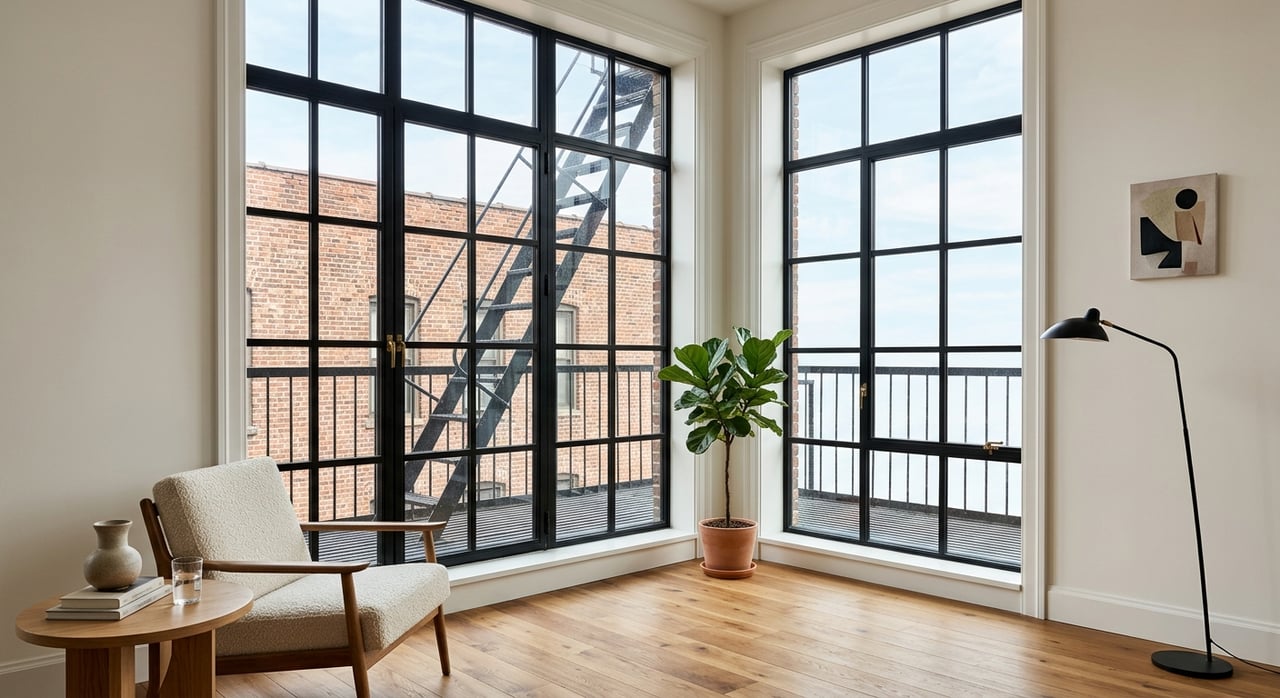
If you are looking at SoHo as an investment play, the first question is not whether the loft looks beautiful. It is whether the numbers, legal status, and rental path actually support your strategy. In a neighborhood where character and scarcity drive pricing, you need to look past the cast-iron charm and underwrite the asset with care. This guide will help you evaluate SoHo loft condos and rentals more clearly so you can spot where the opportunity is, where the limits are, and what deserves extra diligence before you move forward. Let’s dive in.
Why SoHo attracts investors
SoHo sits in Manhattan’s luxury tier, and that matters right away for how you should think about an investment here. StreetEasy currently shows SoHo at about a $3.4 million median sale price and a $5,995 median base rent, which places it among the city’s higher-priced neighborhoods.
That pricing tells an important story. Based on those directional median figures, SoHo’s rough gross rent yield is about 2.1%, compared with about 2.7% in Tribeca and 4.4% in the West Village. Once you factor in financing, common charges, taxes, and vacancy, SoHo usually looks less like a cash-flow market and more like a long-hold, appreciation-oriented market.
Demand is still strong for clear reasons. SoHo combines historic cast-iron architecture, downtown access, and a well-known lifestyle appeal, while the Department of City Planning notes the area’s central location, transit access, and distinctive built character. Low turnover and limited supply also help support scarcity.
What makes SoHo loft condos different
A SoHo loft is not just another Manhattan condo. In many cases, the building itself is part of the investment story because much of SoHo sits within the SoHo-Cast Iron Historic District, which was designated in 1973 and later expanded in 2010.
For you as an investor, that means exterior changes often face tighter review. The Landmarks Preservation Commission states that landmarked buildings and buildings in historic districts generally need approval for most alterations, especially when changes affect facades, windows, or other visible exterior features.
That does not mean a building is frozen in time. Changes can still happen if approved, and interior work is usually less regulated unless it affects the exterior or requires Department of Buildings permits. In practical terms, a loft with upside may offer more flexibility inside the unit than on the building envelope.
Interior potential matters more
Many SoHo loft condos are marketed around open layouts, high ceilings, and original industrial character. Those traits can support buyer and renter demand, especially when the interior has been updated thoughtfully.
Because exterior alterations may be more constrained, interior renovation potential often becomes the more realistic value-add path. If you are comparing two units, the better opportunity may be the one with stronger interior reconfiguration or finish potential rather than the one that seems to offer a major exterior change.
Scarcity supports pricing
Part of SoHo’s appeal is that its housing stock is not easy to replicate. Historic buildings, limited turnover, and a distinctive loft product create a scarcity factor that can support values over time.
That is one reason SoHo often attracts buyers who are comfortable with a premium price point. The investment case may depend less on maximizing current income and more on owning a rare product in a tightly held neighborhood.
Legal status can change the investment case
In SoHo, the floor plan is only part of the story. The legal status of the unit can affect financing assumptions, rental plans, future resale, and your overall risk profile.
The Department of City Planning says current residents in SoHo and NoHo generally fall into three categories: JLWQA units, Loft Board-regulated loft buildings or IMDs, and converted or newly built market-rate residential units approved through special permits or variances. That means you should never assume every loft operates like a standard condo simply because it looks like one.
The city also states that the SoHo/NoHo Neighborhood Plan was approved on December 15, 2021, creating the Special SoHo-NoHo Mixed Use District and adding a voluntary path to convert existing conforming JLWQA space to residential use. At the same time, new JLWQA conversions were prohibited after that date.
Why classification matters
If a building is an Interim Multiple Dwelling, or IMD, the owner must register with the Loft Board until the building is removed from Loft Board jurisdiction. That status can affect how you evaluate occupancy, compliance history, and risk.
For a conventional investor, the key takeaway is simple: verify whether the property is a standard condo, a Loft Law building, or a JLWQA unit before you underwrite rental income or resale assumptions. In SoHo, legal details are part of the asset itself.
Rental strategy in SoHo
If your plan depends on flexible short-term rental income, SoHo may not fit that model. New York City’s Office of Special Enforcement states that rentals of fewer than 30 days are considered short-term rentals, and in permanent residential buildings, whole-apartment short-term rentals are not allowed.
The city also states that rentals of 30 days or more fall outside that short-term rental regime. As a result, most investors should underwrite a standard long-term lease strategy, not an Airbnb-style fallback.
That matters because SoHo’s relatively modest rent level compared with its high acquisition cost already puts pressure on yield. If short-term rental income is not realistically available, your numbers need to work on a traditional lease basis.
Building rules can narrow your options
Even if city rules allow a certain use, building-level rules can still affect what you can do. Occupancy type, prohibited-building status, and house rules may further limit rental flexibility.
For that reason, rental underwriting in SoHo should be conservative. If the investment only works under best-case assumptions, it may not be the right fit.
Taxes and holding costs deserve close attention
Property taxes are an important part of the SoHo investment equation. New York City’s Department of Finance classifies condos and co-ops as Class 2 properties and values them as if they produce income.
The city also offers a cooperative and condominium tax abatement for eligible owners, but it is generally limited to primary residences and requires filing through the board. For many investor or second-home scenarios, that benefit may be less useful or unavailable.
This is one reason headline purchase price is only the starting point. Your true carrying cost should include taxes, common charges, financing, and a realistic vacancy assumption.
Exit costs can be substantial
SoHo investors also need to think about the cost of getting in and out of the asset. New York State’s additional transfer tax, commonly known as the mansion tax, is 1% on residential conveyances of $1 million or more.
New York City’s Real Property Transfer Tax is 1.425% on residential transfers above $500,000. On a hypothetical $3.4 million SoHo condo, those two taxes alone would total about $82,450 if the property were bought and later sold at roughly the same price, before brokerage and other closing costs.
That does not mean SoHo is a poor investment. It means your hold period matters. A short hold can make those transaction costs harder to absorb, while a longer hold may fit the neighborhood’s investment profile more naturally.
How SoHo compares with nearby options
If you are choosing between downtown neighborhoods, SoHo stands out for combining a very high entry price with more modest rent relative to capital cost. That makes it a more specialized investment choice.
Tribeca is often the closest comparison for buyers who want a loft district and stronger rent levels. StreetEasy shows Tribeca at about a $3.5 million median sale price and $7,897 median base rent, with renovated warehouse-style housing still defining much of its inventory.
The West Village is a different product type. StreetEasy shows it at about a $1.5 million median sale price and $5,495 median base rent, with housing stock that is more tied to historic townhouses and walk-ups than classic industrial lofts.
Choosing the right thesis
If your goal is maximum current income, SoHo may not be your first choice. If your goal is owning a rare loft product in a tightly constrained neighborhood with long-term appeal, the case becomes more compelling.
That is why SoHo often fits buyers with an appreciation-oriented, long-hold, or second-home thesis better than those chasing near-term yield. The neighborhood can still make sense for investors, but only when your strategy matches the realities of pricing, regulation, and carrying costs.
What to verify before you buy
Before you move ahead on any SoHo loft condo or rental, your diligence should be especially thorough. A beautiful unit can still be the wrong investment if the legal and financial details do not line up.
Here is a smart checklist to keep in mind:
- Confirm whether the unit is a conventional condo, a Loft Law building, or a JLWQA unit
- Verify the building’s landmark or historic district status
- Review any Loft Board registration history if applicable
- Check building-level rental rules and use restrictions
- Underwrite long-term rental income rather than short-term rental assumptions
- Review property tax treatment and whether any primary-residence-only abatement would apply
- Factor in mansion tax, transfer tax, and other closing costs when estimating your hold period and exit strategy
In SoHo, these are not minor details. They directly affect value, flexibility, and your ability to execute the investment plan you have in mind.
If you are weighing a SoHo loft, the best approach is to pair neighborhood knowledge with disciplined underwriting. That is where a finance-minded, Manhattan-specific view can help you separate a trophy purchase from a smart one. If you want a sharper read on value, rental potential, or resale positioning in SoHo, Josue Gonzalez can help you evaluate the numbers and the nuances with a clear local strategy.
FAQs
What makes SoHo different from other Manhattan neighborhoods for investors?
- SoHo combines a high median sale price, relatively modest median rent, landmarked building stock, and legal complexity around loft use, which often makes it more of a long-hold or appreciation play than a yield-first investment.
What should you verify before buying a SoHo loft condo?
- You should verify the unit’s legal classification, any Loft Board or JLWQA history, landmark status, building rental rules, tax treatment, and expected closing and exit costs.
Can you use a SoHo investment property for short-term rentals?
- In most cases, you should not underwrite that strategy, because New York City says rentals under 30 days are short-term rentals and whole-apartment short-term rentals are not allowed in permanent residential buildings.
How do SoHo rental numbers compare with Tribeca and the West Village?
- StreetEasy’s current directional medians show SoHo at about $5,995 in base rent, compared with about $7,897 in Tribeca and about $5,495 in the West Village.
Why do taxes matter so much for a SoHo investment purchase?
- Taxes affect both carrying costs and exit costs, and on a multimillion-dollar purchase, mansion tax and New York City transfer tax can materially change your real return and preferred holding period.